
In a world increasingly dominated by precision and AI-polished outputs, the allure of imperfection has never felt more needed. We sat down with our Creative Director Ant McNally, to explore why the ‘rough edges’ in design often resonate the most, and how imperfection continues to shape creative culture, branding, and visual communication.
What does ‘imperfection’ mean to you in the context of design
I think in traditional design, imperfection is something you’re trained to avoid. Design is about balance, considered composition, clean fonts, all of those things – you want the layout to work well. There’s a point where you can look at something and say, ‘this is more perfect than that’, because it functions better.
But when something is more on the creative or artistic side of things, you can make a conscious decision to make things imperfect. Certain processes make you feel naturally lead to imperfections — textures, scuffs, asymmetry — and they can add charm, nostalgia or realism. Sometimes you even have to build imperfections back in because the work can become too clean, too sterile, and it stops feeling real.

In which contexts is embracing imperfection more appropriate?
3D is a great example because it comes out really clean, by default. In the real world, every surface has blemishes – there’s no such thing as a flawless material. Look around you: everything is covered in tiny imperfections. A table has a mark from where something fell on it years ago. There’s dust on the edges. Light hits surfaces in unpredictable ways. All of these small cues stack up to something that feels believable. If you don’t include these in your 3D scene, it’s hyper-realistic, but doesn’t feel real.
If your goal in 3D is realism, whether because real-world production is too expensive or simply not possible, then you have to layer in all those imperfections. Even in post-production, you add things like chromatic aberration, lens distortion, variations in bokeh to give that beautifully, buttery look. Ironically, people pay huge amounts of money for lenses that reduce these effects in real life, but when they’re missing in CGI, the image feels unnatural.
Is imperfection still important in fictional, gamified or animated worlds?
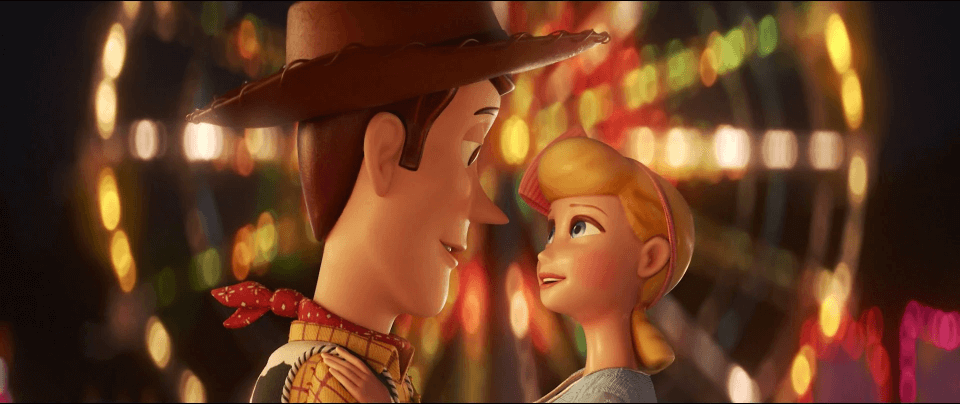
Yes and no – look at studios like Pixar. They’re not in any way aiming for realism – look at the proportions of the humans in their films. But it doesn’t mean they don’t work hard to make their scenes look gorgeous and detailed – the hair, the fabric, the lighting. I believe they have even gone so far to create digital replicas of specific lenses, to adapt the shot for different characters e.g. Woody and Bo-Peep in Toy Story 4.
The end result isn’t ‘realistic’, but it feels real, emotionally. It’s believable within its own world. That believability comes from carefully balancing polish with deliberate imperfection.
So, how do you find the sweet spot between polished and imperfect?
You decide the style right at the beginning. If you’re aiming for photorealistic product visualisation e.g. the Hologic gantry, chase perfection, then account for just enough imperfection to make it convincing.
If you’re creating motion graphics or something more illustrative, you can embrace more obvious stylistic imperfections and that aesthetic, wobbling lines, grainy shading, texture that ‘dances’, like in our MIBS explainer video.
Then there are projects, like the 2025 Apple Christmas ad we discussed the other day, where the whole approach is intentionally imperfect. Real sets, puppets, visible textures, techniques that were once limitations e.g. stop motion, pre-VFX, now add nostalgia, charm, and warmth.

Are some types of imperfection more effective than others?
It depends what you’re trying to achieve. For something more intentionally hyper-realistic, you need to mimic real-world phenomena e.g. the way water moves and drips, fingerprints, scratches etc. Get it wrong, though, and it looks artificial.
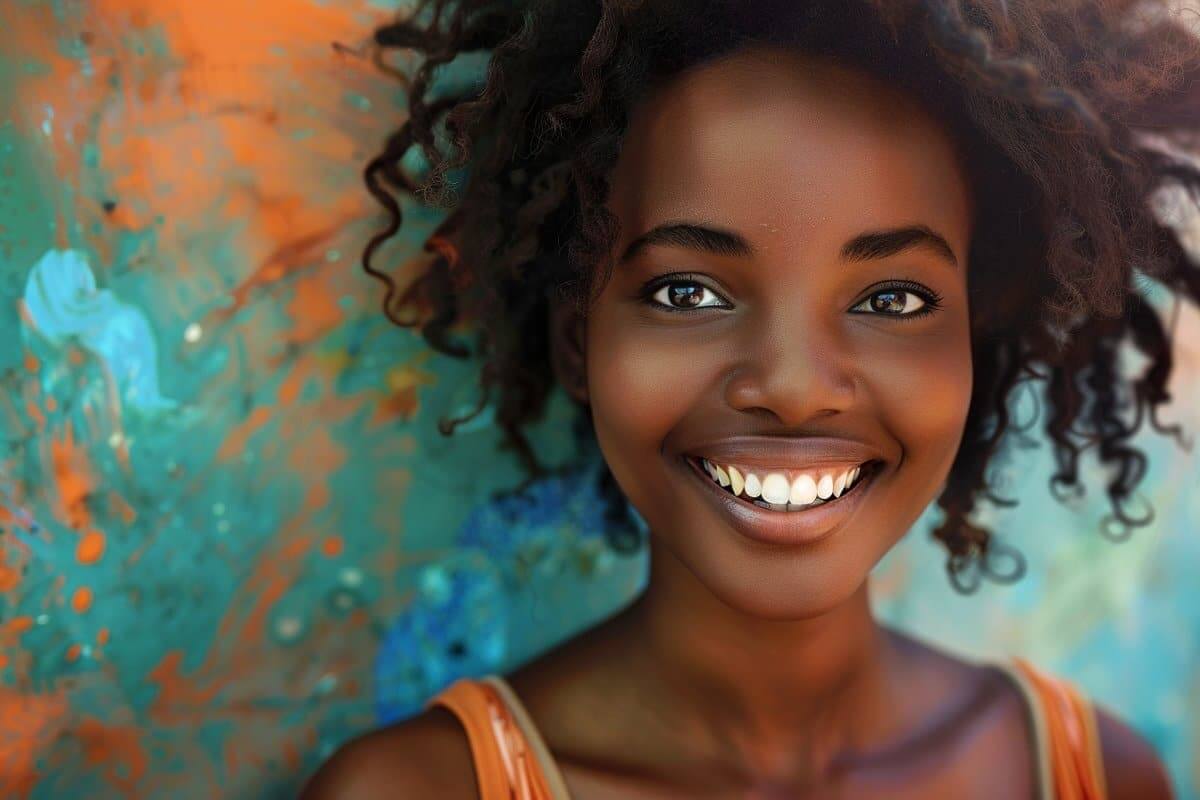
Now we’re experiencing the modern ‘uncanny valley’ of AI. Whether in imagery or copy, something can be almost right, too perfect, too smooth, and our brains immediately detect that it’s off. We’re very attuned to sincerity.
Why do audiences respond so strongly to imperfection?
Because we aren’t perfect. We know we’re not. We naturally look for mirrors — for things that feel like us.
Perfect design can feel distant or cold. Imperfect design feels human. The same goes for copywriting: if every line is flawless, rhythmically identical, it becomes flat. We want cadence, variation, personality.
Do you think AI will learn from these subtleties as it evolves so it’s harder to tell the distinction?
I think it already is. Early AI images of people for example had flawless skin and perfect symmetry. Newer iterations bring in more nuance, texture variations, age spots, slight asymmetry, because they make the image feel more human.
But the funny thing is AI can be technically perfect and still feel emotionally empty. I saw a video from an artist who worked on Pixar films. His digital painting of a hand was incredibly loose but full of intent in the way he used warm and cood lighting. The image felt alive. Meanwhile, an AI equivalent might be technically more accurate but has no charm. When there’s imperfection, your brain connects the dots to try and find the whole picture – it’s satisfying. Perfection is too easy, you don’t have to work for it.
How does imperfection play out in branding and logo design?
For me, that’s where the loss of imperfection is most visible.
Take the early Go Daddy logo from the 90’s, a rough, hand-drawn character made from imperfect shapes. It had a lot of charm because it was just that little bit rubbish. Over time, it has become more refined, then more corporate, and eventually lost that personality.
The same trend shows up everywhere: Google’s serif to sans transition, the flattening of automotive logos like Volkswagen and Jaguar, or fashion houses like Burberry and Saint Laurent stripping away heritage serifs for minimalist, generic sans-serif wordmarks. It used to be nice to see the individuality.
In the pursuit of modernity and accessibility, many brands have lost the details that once made them individual
If you were mentoring a young designer who’s reluctant to ‘break the rules’ and embrace imperfection, what would you say to them?
It can be difficult, especially for those trained in design who haven’t done much painting, drawing, photography or any of those things, because the other disciplines have sets of rules that you feel you have to play to.
You have to allow yourself to be open-minded and make sure you have access to a wide pool of inspiration. Look at films, animation, photography, art, anything outside your usual focus and commit it to Pinterest and Figma boards. Study how other creators use imperfection, and why it works. Also recognise that there’s a fine line between ‘quirky and charming’ and ‘amateur and messy’. Learning where that line sits comes with experience.
With AI now generating near-perfect images on demand via an easy enough prompt, designers have to go harder than ever to find what feels human and resonates with the audience.
Finally, if you had to summarise your thoughts on imperfection in design in one sentence, what would it be?
I think this conversation is very well timed. The quote you shared about comparing ourselves (or our work) to our synthetic best stuck with me. It all feels a bit dystopian but I think we’ll have an anti-movement and the future of design will swing back toward the handmade, the natural and the human – imperfections and all.
Share this