
July’s updates point to a more connected digital landscape, where search, social media, advertising and AI are increasingly influencing one another.
Google is making it easier to see how people discover social content through search. Microsoft Clarity is introducing clearer ways to assess whether website content is shaping AI-generated answers. OpenAI is adding more familiar controls to its advertising platform, while YouTube continues moving towards conversational, answer-led discovery.
At the same time, platforms and regulators are placing greater emphasis on transparency, originality and accountability.
Search, SEO, AEO & GEO
Social search demand is becoming easier to measure
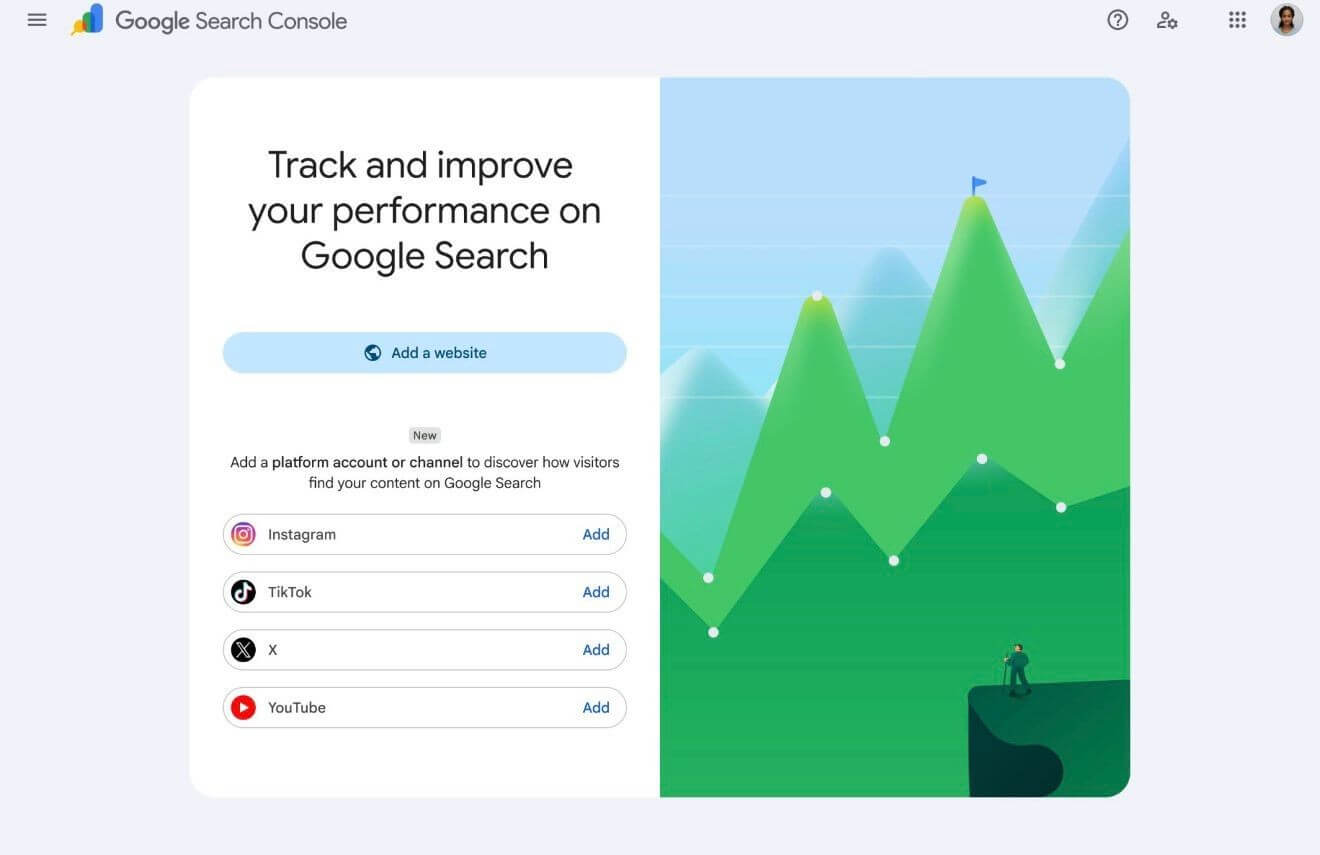
Google Search Console can now help businesses understand which Google searches lead people to their content on Instagram, TikTok, X and YouTube.
This matters because social media content is no longer discovered only through platform feeds. Potential customers may search Google for advice, reviews, demonstrations or product information before landing on a social post or profile.
The update gives businesses a clearer view of the topics and questions driving that discovery across individual platforms.
Schema still matters, but it is not a shortcut to AI visibility
There was also growing industry discussion in July around entity-based SEO and the limits of relying on structured data alone.
Schema remains useful because it helps search engines interpret the information on a page. However, adding schema markup will not automatically make a business visible in AI-generated answers.
AI systems also need to understand how an organisation, its people, services, products and expertise relate to one another.
Industry analysis suggests AI visibility is supported by a combination of:
- Authoritative and useful content
- Trusted third-party mentions
- Consistent information across digital channels
- Strong technical SEO
For businesses, the takeaway is that AI visibility cannot be solved with one technical fix.
Businesses need a clear and credible digital presence across their website, media coverage, social channels, professional profiles and other trusted sources.
The stronger and more consistent those signals are, the easier it becomes for both search engines and AI systems to understand what the organisation does and why it should be considered authoritative.
Advertising
ChatGPT Ads is gaining more familiar campaign controls
OpenAI is expanding ChatGPT Ads with additional tools for bidding, measurement, budget pacing, location targeting and campaign management. These updates give businesses greater control over how campaigns are tested and assessed.
Advertising within an AI platform could reach people while they are actively researching a subject, comparing options or asking detailed questions. That places advertising closer to the decision-making process than many conventional display or social placements.
However, ChatGPT Ads is still an emerging channel – particularly in the UK – and is still evolving it’s targeting capabilities.
We would recommend treating it as a controlled test rather than moving substantial budget away from established platforms. Performance should be assessed against lead quality, conversion rate, cost per acquisition, commercial value and performance from existing paid channels.
AI disclosure is becoming part of advertising governance
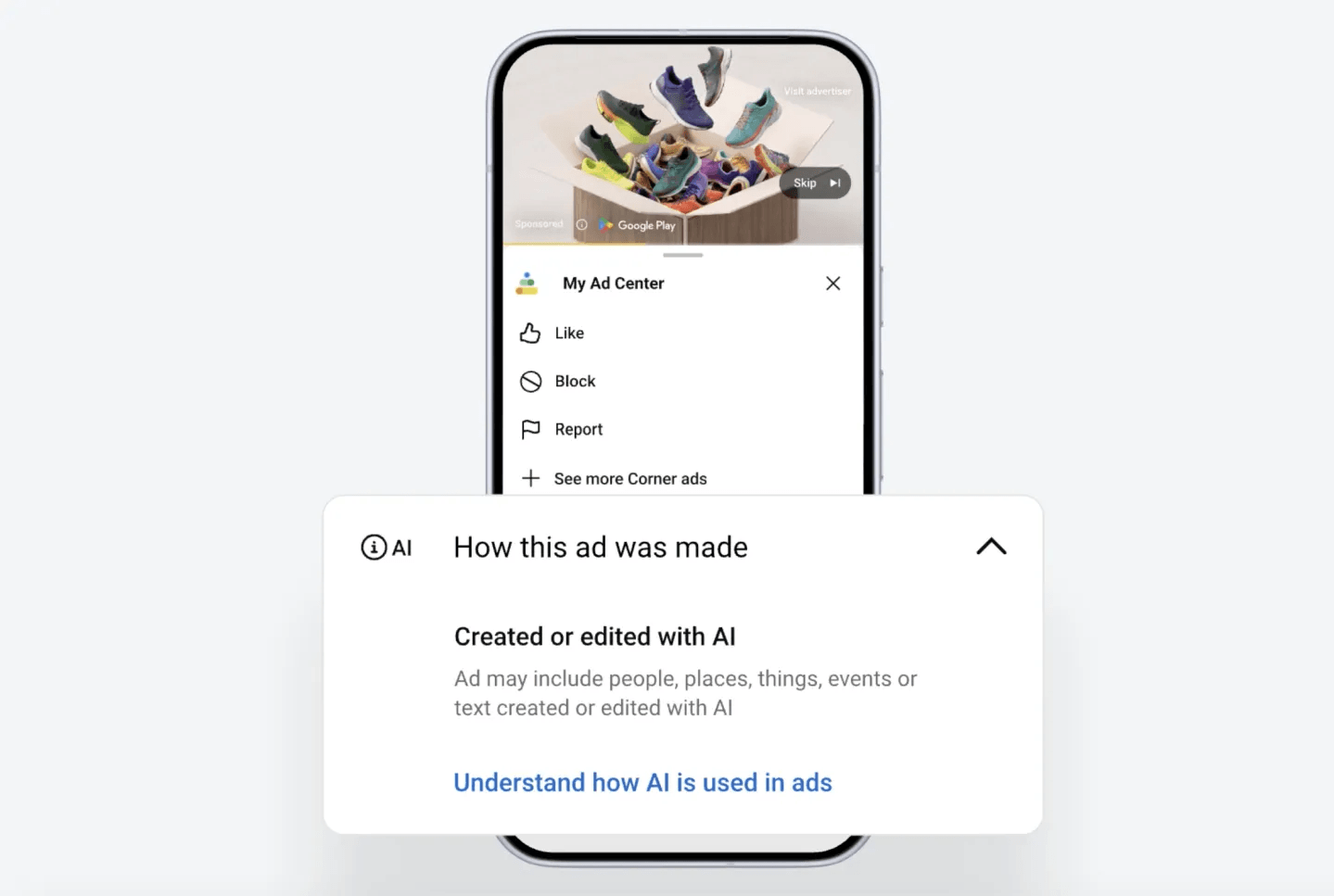
Google has introduced new transparency options for image and video advertisements created or edited using AI.
Advertisers can add text or visual labels to AI-generated creative, while Google may automatically apply labels to some assets produced through its own AI tools.
For businesses, this is not only a compliance issue. The faster it becomes to produce advertising assets, the more important the approval process becomes.
AI can reduce production time, but it does not remove the need for human judgement. Brands still need clear ownership of creative sign-off, disclosure and risk assessment before any campaign goes live.
PR
Distinctive brand assets can turn a small idea into a major talking point
One of July’s strongest PR examples came from Asda. During the World Cup, the retailer temporarily changed the name of its George clothing brand to “Jorge”.
Rather than creating an elaborate campaign, Asda used an existing and recognisable brand asset to join the wider cultural conversation. Audiences could understand the joke at a glance, making it easy to share and discuss.
The wider lesson for businesses is that reactive PR does not always require a large budget or complicated execution. Strong brand recognition makes reactive ideas easier to understand and more likely to travel.

Exposure can quickly become a reputational issue
According to Metro, ITV’s The Voice faced criticism after independent bakery Get Baked shared an email that exposed the programme’s producers as on the hunt for free products to stock backstage dressing rooms and green rooms. The proposed return was supposed exposure to “highly influential” people connected to the programme.
The backlash was not only about the request itself. It was also about how the relationship between a major media brand and an independent business had been framed. Brands need to consider power dynamics, fairness and public perception before approaching smaller organisations, particularly when exposure is being offered instead of payment.
An affiliate partnership that makes sense internally can look very different once it is shared publicly. The key is to remember that relationships where there is a clear contrast in size and scale between organisations, need to be approached with respect, clear value and realistic expectations.
AI
AI-generated performers are moving into regulated territory
New York State has introduced a law requiring disclosure when certain advertisements include digitally created “synthetic performers”. This includes some human-like performers generated using AI or other software in visual or audiovisual advertising.
For businesses using AI-generated people or avatars, the immediate issue is process. Although this law applies in New York, it reflects a wider direction of travel across the content landscape.
AI-generated people are becoming easier to produce and harder for audiences to distinguish from real performers. Regulators are likely to continue responding with stronger transparency requirements.
Digital
Platforms may face greater responsibility for fraudulent advertising
Ofcom has proposed tougher duties for major online platforms under the Online Safety Act, aimed at reducing scam advertisements, fake advertiser accounts and other forms of fraudulent advertising.
Fake promotions, impersonation accounts and misleading landing pages can damage trust, particularly where customers are making expensive or sensitive decisions. Brands should have a clear process for monitoring, reporting and escalating suspected misuse of their identity online.
Microsoft Clarity makes AI visibility more actionable
Microsoft Clarity has introduced Topic Insights, a new AI Visibility feature that helps businesses understand how their content contributes to AI-generated answers.
The tool builds on Clarity’s Citations feature.
Rather than only showing whether a domain has been cited, Topic Insights is designed to provide a broader topic-level view of:
- How often a website is cited
- How much its content contributes to an answer
- Which competitors appear alongside it
- Where competing domains are performing more strongly
- Which content gaps may be limiting visibility
For businesses, this makes AI visibility easier to assess and act on. They can begin identifying the topics where they already have authority, where competitors are stronger and where further content may be needed.
The measurement of AI visibility is still developing, so the results should be treated as with a pinch of salt – for now.

Social Media
YouTube is increasing scrutiny of low-value AI content
YouTube has clarified its monetisation policies around AI-generated, repetitive and potentially upsetting videos, giving businesses a clearer indication of where the platform is drawing the line on low-quality automated output. Originality, audience value and human oversight remain important to both visibility and trust.
YouTube is also making episodic content easier to organise
YouTube’s new Shows feature allows eligible creators within the YouTube Partner Program to organise playlists into seasons and episodes or create a new show.
YouTube says shows may be eligible to appear within Search, Recommended Shows and Continue Watching. For businesses producing podcasts, interviews, educational videos or recurring content series, this creates a clearer way to package existing material.
A structured show provides viewers with a clearer route through the content and makes it easier to understand what to watch next. This could help businesses extend the value of long-form content while making recurring series easier to discover and navigate.
Instagram gives businesses more control over existing Reels
Instagram’s new Replace Audio feature allows users to change a Reel’s audio without deleting and re-uploading the post, preserving engagement such as likes, comments and shares.
Video discovery is becoming more conversational
YouTube is rolling out Ask YouTube to signed-in desktop viewers in the US.
The feature allows users to ask natural-language questions and receive responses that combine text, long-form videos, clips and Shorts. Users can then ask follow-up questions to refine the results. For businesses investing in video, this means content needs to do more than perform within feeds or conventional search results.
The platform increasingly needs to understand what a video is about, which questions it answers and where those answers appear. Video should therefore be considered part of a wider search and AI visibility strategy, rather than simply a social media format.
X is placing more emphasis on mutual connections
X has updated its ranking system to give greater visibility to posts from mutual followers within reply sections.
The platform said it had been under-weighting replies from users who followed each other, allowing responses from strangers to dominate discussions and making some threads feel more hostile.
The change is intended to support more relevant conversations and stronger clusters around shared interests. For businesses active on X, this could make genuine community-building more important.
What are the key takeaways?
July’s updates show that digital visibility is becoming more connected, more measurable and more accountable.
- Social content can now be linked more clearly to search demand.
- AI visibility is becoming easier to assess at topic level.
- AI-led advertising is gaining more established campaign controls.
- Distinctive brand assets remain valuable in reactive PR.
- Regulators and platforms are expecting stronger disclosure and oversight.
- Video content needs to work for both viewers and conversational search systems.
- Genuine audience relationships may become more important than surface-level reach.
The organisations best placed to benefit will be those building the clearest, most credible and most useful presence across every place their audiences may discover them.
What lands next? The TMC team will be watching closely…
Subscribe for next month’s roundup of the updates you should be paying attention to.
Share this