
The ‘Power of Play’ cannot be ignored – it’s a tool that engages and motivates all of us, no matter our age. Learning and problem-solving can often become onerous and uninspiring if presented in a standard text format. It’s difficult to engage with, becomes a problem to retain, and leaves the reader unexcited about the topic.
In contrast, overlaying gamification onto core information can elevate engagement, entertainment, and education to an unmatchable level. Integrating game-like components into the foundation of the material can significantly enhance audience motivation.
Gamification; a modern concept?
It may sound like a modern concept, but the strategy of gamification isn’t new. The use of point systems and rewards dates back hundreds of years. Using achievable goals to boost motivation is a tactic often found within many tasks – providing micro-endorphins as a reward for reaching each phase of the activity.
In the words of Mary Poppins, “For every job that must be done, there is an element of fun”.
The evolution of digital technology has been the root of why gamification is perceived through this futuristic lens. E-commerce utilises reward systems when users pass through the consumer funnel, while virtual courses motivate users with progress bars and level systems. These concepts are designed to respond to the user’s needs and ensure motivation is provided to encourage them to achieve their goals.
Why does this work well in the digital space? Our attention spans have changed drastically.
According to Wyzowl, in 2000, the average user attention span sat at 12 seconds, declining to just 8.25 seconds in 2015 – a variance of 25% over 15 years.
With technology always at our fingertips we have instant access to limitless knowledge, entertainment, and updates, and we have developed a desire for instant gratification. Platforms and systems that aren’t offering immediate excitement, are quickly overlooked and forgotten. So how can we market or offer new information to an audience that makes decisions so brutally?
The power of gamification.
Entire worlds can be accessed within browsers, with users welcomed into immersive, hyper-realistic environments. Multiple games can be hosted from one platform. Interactive question-and-answer formats can pop up when users engage with pages. So why not apply these immersive experiences to our resources? Audiences are willing to learn – they want to learn. Yet, we must offer engaging and exciting experiences in order to capture their valuable attention.
The purpose behind gamification.
Gamification offers us a range of solutions depending on the purpose. To clarify this purpose, we must audit the project and commercial objectives and ask ourselves – what does this resource strive to achieve?
Purpose 1: Enhance the learning experience.
For those developing new learning resources, gamification can be used to enhance the user experience. Whether the content is aimed at children or adults, the ‘fun’ elements are motivational for most. Game-like elements add a layer of engagement beyond a textbook format. Point systems, levels, and pop-ups all create a sense of encouragement and competitiveness within the user.
Recent studies suggest that 48% of employees experienced increased engagement through gamification. By participating in gamified learning, users are more actively engaged – no longer passively skimming but actively connecting.
Immersive worlds can be created with a focus on encouraging new learning. TMC recently collaborated with KentAir to develop an interactive, fictional town, where school children can explore areas of pollution and earn points for each challenge they solve. Through vibrant animation and self-controlled navigation, pollution education becomes an engaging and immersive experience for young people.

Purpose 2: Influence human behaviours.
As individuals, our long-term habits are often difficult to change. Our opinions, built on our own unique experiences and assumptions, can seem like they are written in stone.
Gamification can be leveraged to shape such habits.
Gamification is the process of using game-like formats within non-gaming contexts. Leading an educational resource with a game-like structure can create a highly engaging experience for any targeted user.
Healthcare and manufacturing industries have been utilising this approach for some time. Confident in the use of existing tools and technology, the introduction of new concepts to team members can require new, persuasive methods of communication. Through virtual environments, users can physically see and interact with a new piece of equipment, learning its benefits and how it would fit within their daily routines. This ensures more efficient and cost-effective methods of training, leading to more valuable outputs.

Purpose 3: Replicate real-life scenarios.
Experience can be everything. It’s the showing rather than telling. Gamification can take the form of a real-life situation to breathe life into the information and showcase why it is essential that the user understands it. By replicating real life, we are creating a greater sense of relatability. Users see how these ideas fit within their own experiences and understand the importance of the information presented.
When looking to warn of or reduce possible risks to users, employing a gamified experience can better highlight the severity, context and practical advice of the issue. Examples include digital Health & Safety courses that include pulsing ‘danger’ hotspots that users can click to expand further information, while triggered ‘pop-up’ questions could simulate high-risk scenarios for a more immersive learning experience.
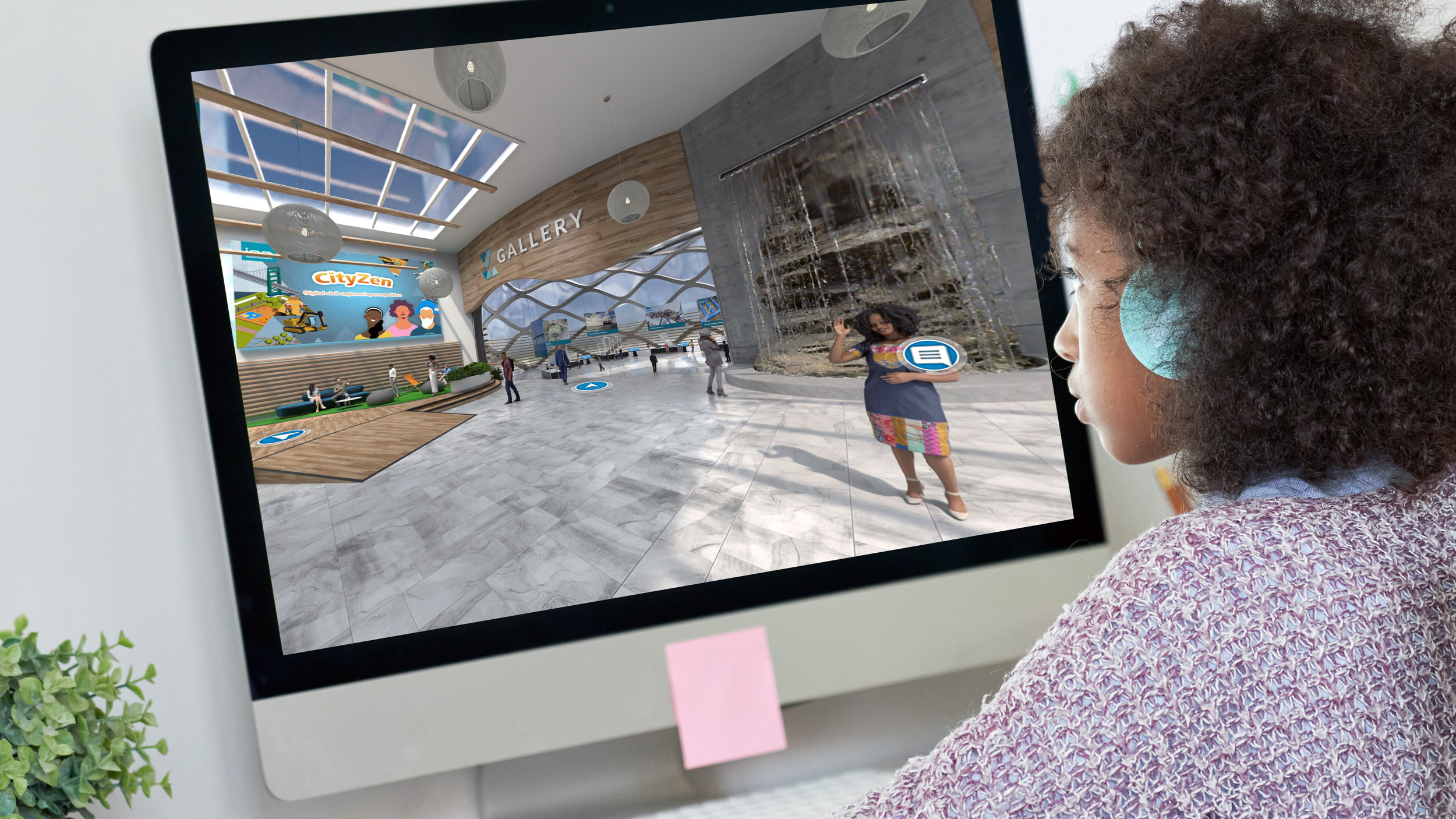
Immersive environments can portray organisational, educational, and commercial settings. TMC recently collaborated with The Institute of Civil Engineering (ICE) to develop a 3D exhibition environment that gives insight into career pathways and diversity within engineering, navigating school-aged users through the setting with hotspots and navigational points. Aligning with their commercial objectives of increasing memberships, this resource targeted at secondary school students sets to nurture the engineering talent pipeline and build brand loyalty from an early age.
Immersion to leverage emotion.
Correctly leveraging the right emotions within communication is critical. Users must feel emotionally invested in information for it to hold significance and increase their own retention then recall. With gamification, each element can be tailored to trigger a different emotion that then results in a particular desired behaviour.
When gamified resources replicate real-life experiences, they instantly become more relatable. Users have autonomy to navigate, click and answer themselves. They’re highly active in their own learning journey, building an emotional connection with the tool they’re using.
An educational tool
Global technology giant, Siemens Plc, has successfully leveraged this concept within their own educational tools and resources. Their ‘Decarbonisation Game’ in particular, taps into the wider environmental discourse. It launches students directly into a dystopian world with similar characteristics to Earth, which has been severely impacted by climate change, with the ability for users to navigate and interact freely. By placing users directly into the environment and having them make decisions that dictate their own outcomes, the danger is emphasised, ensuring that the messages resonate with them on a deeper level.
By understanding how to leverage the emotions triggered by immersion, we can create a highly effective resource to fully captivate the user, influencing their behaviour in the wider world.
The power of play is an incredibly effective tool for enhancing user engagement, especially when considered against the endless streams of digital content vying for users’ attention.
Share this